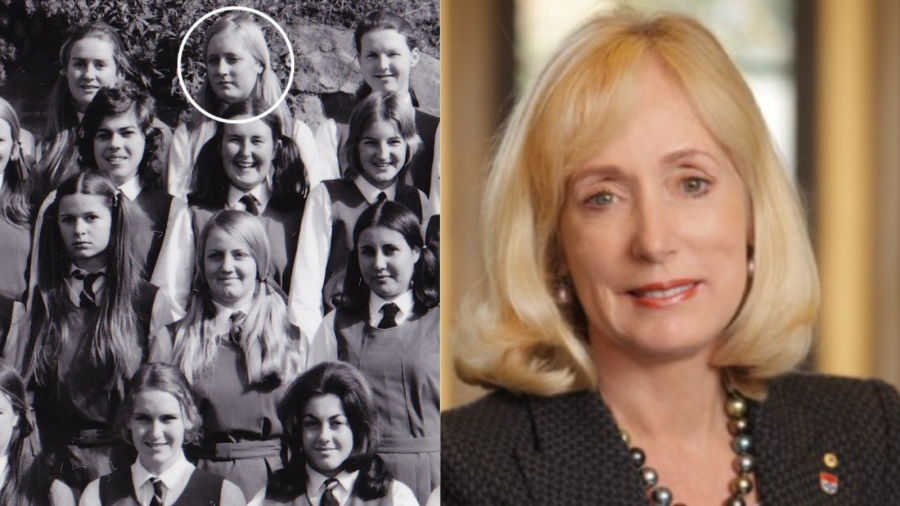
Driven by an uncompromising pursuit of scientific truth, Dr Janet McCredie AM was one of Australia’s most influential radiologists and medical researchers.
Janet’s groundbreaking work in the 1970s revealed how and why the drug thalidomide had caused significant congenital disabilities after pregnant mothers had been prescribed it for morning sickness. She also played a founding role in the establishment of the first breast screening programs in NSW, after her mother’s pioneering work in the same field.
Born in Campsie in 1935, Janet attended Ascham from the age of 10. She grew up in an environment where the pursuit of excellence in medical study, research and work was an everyday part of life. Her mother Marjorie Dalgarno was a radiologist, opened the first radiography practice in Sydney’s suburbs and performed the first mammogram in Australia in the 1950s at the Rachel Forster Hospital. Janet’s father Harold McCredie was a GP and obstetrician.
After finishing her schooling at Ascham, Janet graduated from Medicine at the University of Sydney in 1959. She pursued postgraduate studies in radiology in the UK and became a fellow of both the UK College and the Australasian College of Radiologists.
In the late 1950s to early 1960s, the drug thalidomide was commonly prescribed to pregnant women suffering nausea. It had been withdrawn from sale, however, after it was linked to severe birth defects. More than 10,000 children in 46 countries were born with congenital deformities after their mothers had taken thalidomide.
Around 1970, while Janet was working as Staff Radiologist at Sydney’s RPA Hospital, she was asked to examine the X-rays of children born to women who had taken thalidomide. As quoted in a profile published by the University of Sydney, Janet said the X-rays were ‘the most grotesque deformities of bone and joints’ she had ever seen.
‘When I started reading the literature, I found that nobody had ever really worked out what the target organ was for the drug, what tissue it damaged within the embryo,’ said Janet.
She went on to devise the theory of Neural Crest Injury as being the pathogenesis of congenital malformations. She noticed similarities with the effects of advanced leprosy.
In the male-dominated world of medicine at that time, Janet had to doggedly pursue her theory and fight for her work to be recognised. In an interview with the ABC, her nephew David McCredie AM OBE said, ‘There are a huge number of glass ceilings that she had to break through just to be heard, let alone for her science to be actually then rigorously tested and for people to recognise the work that she’d done.’
Her findings were published in the UK medical journal the Lancet in 1973 and in the Australian Medical Journal in 1974, and although the work was a major medical breakthrough, Dr McCredie was more known overseas than she was at home. According to Emeritus Professor Kerry Goulston from the University of Sydney, Janet’s work was ‘the standard of the Nobel Prize’.
During the 1980s, Janet continued her mother’s legacy of using mammography to detect early signs of breast cancer. She lobbied the NSW Minister for Health to obtain a grant to fund the pilot study for mass breast cancer screenings. This eventually led to the ideation for BreastScreen NSW, and Janet worked to convince politicians to set up the mobile program and helped design the first van.
Janet was inextricably linked to Women’s College at the University of Sydney, where she resided as a student, then served on the Board for over 40 years. She funded a scholarship there in her mother’s name and mentored young doctors.
Dr Janet McCredie was made a Member of the Order of Australia in 1994 for her services to diagnostic radiology and medical research. During her retirement, she wrote the book Beyond Thalidomide: Birth Defects Explained.
Janet passed away in 2023 at the age of 88, a true trailblazer in her field. Her significant achievements in medicine remain the benchmark for scientific inquiry, determination and public impact.
References:
Bolger, R (2023), ‘Groundbreaking thalidomide researcher Janet McCredie mourned after death at 88’, ABC News
Mellor, L (2008) ‘McCredie, Janet’, Faculty of Medicine Online Museum and Archive, University of Sydney
Mellor, L (2008) ‘Dalgarno, Marjorie Clare’, Faculty of Medicine Online Museum and Archive, University of Sydney.
Image Credits:
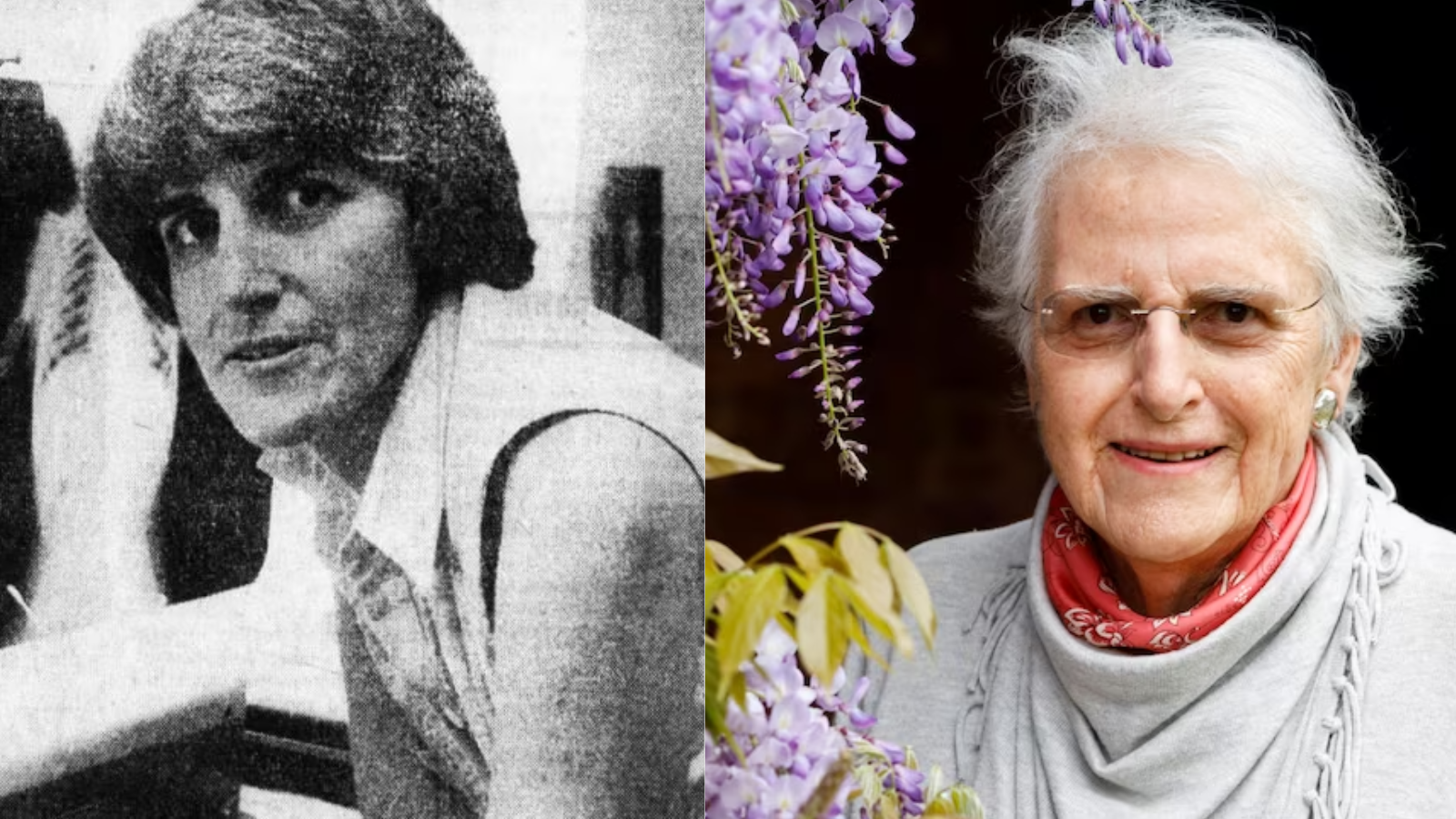
Main image (left) Dr Janet McCredie AM in 1978 with X-rays of children affected by thalidomide. Image: Sydney Morning Herald
Main image (right) Dr Janet McCredie AM. Image: University of Sydney Women’s College
Read our previous instalments of 14 Decades of Stories:
Pioneering feminist and first Ascham student Inez Bensusan
Brilliant scholar Ethel Lane Latham, who was the highest scoring female student in NSW in 1894 and 1895
Bessie Bundock, co-founder of Ascham’s yearbook, Charivari, which has become the School’s continuous primary historical record for over 120 years
Rania MacPhillamy MBE OBE who operated vast rest homes for wounded soldiers in Egypt during WWI
Mother and daughter Linda and Patricia Littlejohn, who smashed the glass ceiling in university and empowered women across society
Ascham Old Boy Lloyd Poulton, who was one of a handful of boys who were enrolled at Ascham early in the 20th century
Inspiring obstetrician and gynaecologist Dr Joan Storey, whose determination and excellence opened doors for women in medicine
After overcoming a life-changing accident, Charlene Meade OAM became a Paralympic pioneer
An original Ascham audio drama bringing to life the 1915 letters of Ursula Carter who worked as a nurse during World War I