While detailed records of Ascham’s earliest years under Miss Wallis were either not kept or were lost over a century ago, what we do know is this: some of our first students were, quite simply, brilliant.
In the first decade of Ascham, two students, Ethel Lane Latham and Marjory Knox, attained the highest marks of any female secondary student in NSW in the external examinations. In NSW in the 19th and early 20th centuries these were known as the Junior and Senior University examinations, equivalent to the current Year 10 Record of School Achievement and Year 12 Higher School Certificate. The female student who topped the State would be awarded the Fairfax Prize and £10 or £20 respectively.
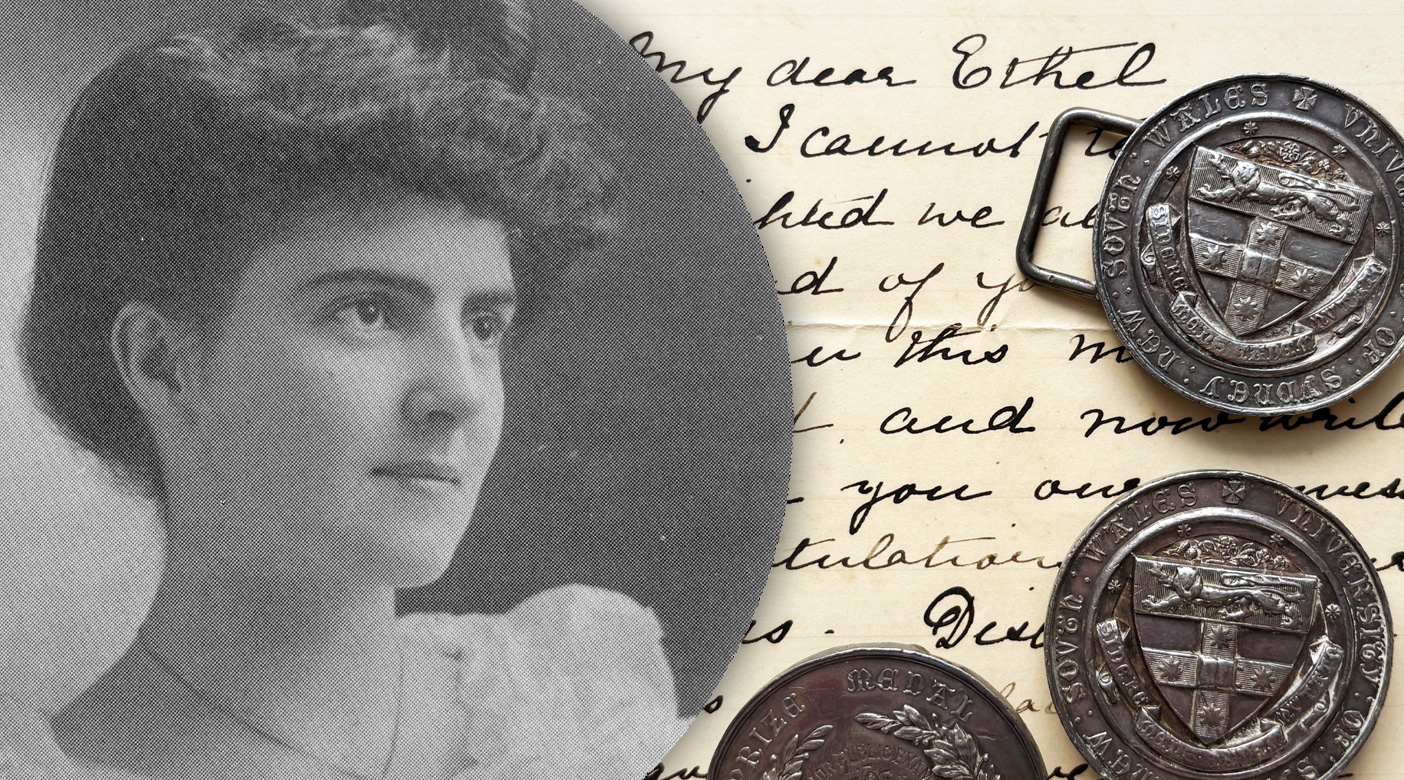
Ethel Lane Latham not only won the Fairfax Junior Prize in 1894, but also the coveted Fairfax Senior Prize in 1895. Three years later in 1898, Marjory Knox won the Senior Prize.
It is significant to note that the Fairfax Prize was endowed by the Fairfax family as a gift to Sydney University, marking the momentous ruling in 1881 by the Sydney University Senate ‘to admit women to all University privileges, and to place them in all respects as regards University matters on an equal footing with men’. Women were admitted from 1882 onwards, and Ascham women stood part of those cohorts in the early years.
It is a sad irony indeed that although our smart, capable and intellectual Ethel was awarded the prestigious Fairfax Prizes by the most esteemed sandstone university in the country, her parents did not allow her to go to university. Why? We wish we knew. Several of her peers, and indeed Ascham students before her, did go on to university in those first decades of admission—trailblazing a long line of outstanding scholars each with an Ascham education tucked under her belt.
We are fortunate to hold in the Ascham Archives three of Ethel’s Fairfax Prize medals for the individual examinations: French and German in the Junior exam, and European History in the Senior exam. As well, we treasure the numerous letters received from far and wide congratulating Ethel and Miss Wallis on Ethel’s distinguished success.
We know little about Ethel’s life beyond Ascham but a letter she wrote to one of her former teachers indicates she moved to Brisbane the year after leaving school. It’s likely she joined society and spent her days doing what most other young ladies of the late 19th century did until a suitable marriage proposal was made and accepted.
The ‘Weddings’ column in The Queenslander newspaper dated 13 September 1902 documents her marriage to Mr Alfred Walsh who was apparently ‘exceedingly popular in Brisbane social circles’. The column describes in detail Ethel’s exquisite gown, the tiny bridesmaids, prominent families, abundant gifts and bustling social spectacle. But there is, of course, not a word about Ethel’s inquiring nature, her brilliant and studious mind, her academic prowess, or the shining medals she received as NSW’s highest achieving female student two years in a row.
Ethel Lane Latham died in 1977 at the age of 97 and was buried in the historic Toowong Cemetery in Brisbane.
Ethel: we say your name, we honour your remarkable achievements, and we will always remember you.
Read our first instalment of 14 Decades of Stories here—featuring pioneering feminist and first Ascham student Inez Bensusan.