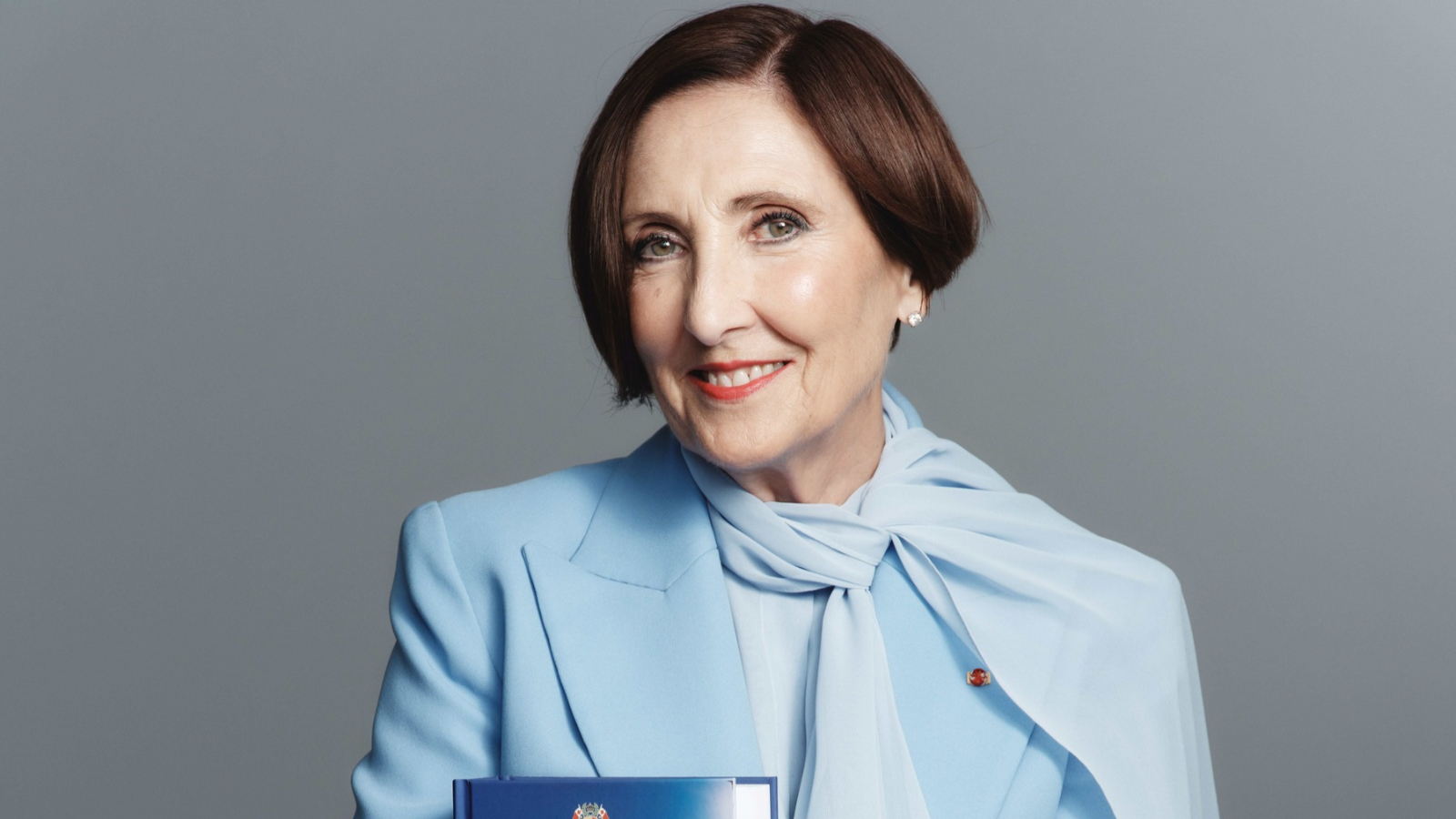
Louise S.R. Waterhouse (1974) is the Honorary Consul-General for the Kingdom of Tonga in Australia and the author of Driving Three Kings. Behind these roles lies a fascinating journey and a remarkable breadth of experience.
After studying Commerce at UNSW, where she received the Lintas Prize, she began her career working in marketing and fashion for international high-end brands before moving into investment and property ventures across Australasia.
Appointed to a consular role for the Kingdom of Tonga in 1995, she has led major cultural, aid, and labour initiatives, including the introduction of the highly successful PALM (Seasonal Worker Programme). A recipient of the Grand Cross of the Crown of Tonga, she remains active in philanthropy, sport, and Australian historical research.
Driving Three Kings was written as a personal memoir to commemorate the Golden Jubilee of the Waterhouse family’s representation of the Kingdom of Tonga. It traces Tonga’s evolving relationship with Australia and charts the island nation’s remarkable progress over five decades—often punching above its weight on the regional and global stage.
Your life has taken you from the world of business into international diplomacy and, more recently, authorship. Did you ever imagine your career would take this path, and what have been your defining moments along the way?
No, I certainly never imagined where life would take me! I have always believed that life should be a series of adventures, and that is how I see my career. Recognising opportunities and having the courage to seize them has been a recurring theme.
As a young student, I was interested in understanding people and what they needed, so marketing was a natural fit. My father was ahead of his time: he treated me just the same as the boys and encouraged my interest in business. I loved my early career, first helping to launch American Express Cards and then working with Fabergé, where I was responsible for brands spanning nail care and fragrance, including the iconic Brut.
A desire to help my father led me into property. That brought quite different opportunities, including working with the extraordinary Dr Stanley Quek to develop luxury apartments, including the iconic Greencliffe on the Kirribilli waterfront.
Our connection with Tonga grew from my father’s close friendship with the then young Crown Prince, later King Tāufaʻāhau Tupou IV. They had studied arts and law together at the University of Sydney in the 1940s. When he acceded to the throne, His Majesty summonsed my father to Tonga and said: ‘Bill, don’t forget about Tonga’! So in 1975, my father became Tonga’s Honorary Consul-General, with responsibility for representing the Kingdom throughout Australia. With a growing Tongan population in Australia, I was officially appointed to join him in representing Tonga in 1995 and later became Honorary Consul-General myself.
Authorship was another unexpected adventure. As we approached the Consulate’s 50th anniversary in 2025, which also marked my 30 years representing Tonga, the Tongan High Commissioner encouraged me to record our experiences for the benefit of the Tongan people. Once I started writing, I could hardly stop. Memories came flooding back: personal moments, extraordinary occasions and glimpses behind the scenes of our family’s relationship with Tonga and its Royal Family.
The title, Driving Three Kings, is quite literal: I have personally driven three successive Kings of Tonga. The book also tells the story of our family’s service to the Kingdom and the friendships that have grown over those fifty years.
Your family’s connection with Tonga spans generations. How have you balanced honouring that legacy with forging your own identity and making your own mark?
For me, honouring my father’s legacy with Tonga means carrying his commitment forward while bringing my own experience and judgement to the role. The relationship began with a friendship, which continues with my own close relationship with the Tongan Royal Family. That personal sense of trust and responsibility remains very important to me.
Balancing everything is not always easy! I generally plan to devote about 30 per cent of my time to Tonga, but circumstances often require much more, particularly after the volcanic eruption and tsunami disaster in 2022.
My work for Tonga brings me enormous joy. I feel privileged to be in a position to make a difference, however small, and that gives the commitment a very personal meaning.
Throughout your varied career, what qualities have been most important to your success, and what advice would you give young women who may not yet know where their careers will lead?
Curiosity, resourcefulness and a willingness to work hard have been important throughout my career. So has believing in myself, particularly when stepping into something unfamiliar.
My advice would be to trust your abilities. You often have more to draw on than you realise, although sometimes you just need to dig deep to discover it.
Having a plan and a sense of direction is useful, but leave room for unexpected opportunities. You do not need to know at the outset where your whole career will lead; I certainly did not. Listen to your inner voice and be prepared to take a chance when something feels right.
Above all, find work that interests and excites you. Anything worthwhile requires effort and dedication, and it is much easier to give both when you care about what you are doing.
Looking back on your time at Ascham, are there any experiences, friendships or lessons that have stayed with you and influenced your journey and who you have become?
I loved my time at Ascham and remain deeply grateful for the education I received. Being trusted with responsibility under the Dalton Plan was empowering. It taught me to organise my work, think independently and take responsibility for my own learning.
My father had shared his business ideas with me from an early age, so I was keen to study economics when it was still a new subject at Ascham. Mrs Danziger made an exception and allowed me to become the school’s first student to sit Level One economics. I loved it and thrived. Then, six months before the HSC, my economics teacher suddenly resigned. Fortunately, the Dalton Plan had already given me the skills to study independently, so I took it in my stride and carried on. It was a very practical demonstration of what an Ascham education had given me.
The confidence to take responsibility, keep learning and tackle something unfamiliar has stayed with me throughout my life.
Annabel Millet (Clark 2000)
Image: Louise Waterhouse (1974)