Earlier this year, I had the incredible opportunity to travel to France with Ascham’s Su Lee Fellowship for Teaching Excellence. I spent eight days in an immersive residency with American photographer Todd Hido in Cosprons (near the Spanish border), followed by the Rencontres d’Arles Photography Festival in Arles, southern France.
The Fellowship was a rare chance to work closely with international artists while developing my own practice. It also reminded me how important it is for teachers to remain active practitioners, learning and experimenting alongside our students. Artmaking isn’t static, I often reflect. It’s a living practice that demands risk, curiosity and resilience.
In Cosprons, I lived and worked collaboratively with artists from around the world. Mornings started with critiques led by Todd Hido, who provided guidance that was both direct and generous. His presentations on editing and sequencing, and the influence of his mentor Larry Sultan, revealed how arranging images can transform meaning. Sequencing is its own language, It’s how emotion and narrative emerge between frames.
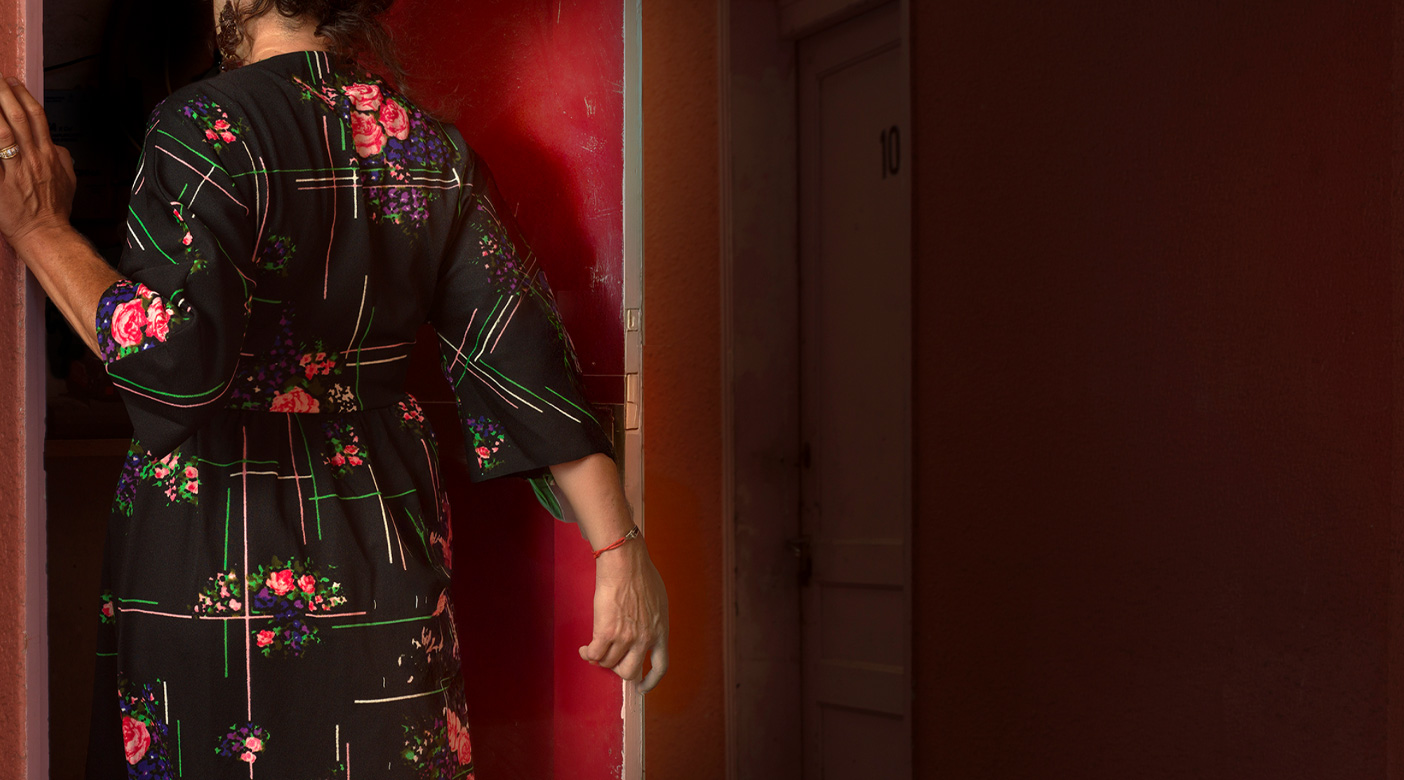
When local models fell through, I started creating self-portraits—a first for me. What began as necessity quickly became a profound shift, exploring performance, illusion and domestic space. That decision to photograph myself changed everything. It reminded me that growth often comes from discomfort—the same challenge I encourage in my students.
The residency ended with a group exhibition at a local restaurant. Sharing work in a public space highlighted how constraint, intensity and critique can spark creativity—principles I now bring into my teaching.
Next, at the Rencontres d’Arles Festival, I immersed myself in one of the world’s most lively photography celebrations. From Nan Goldin’s powerful Memory Lost performance under the Roman amphitheatre sky, to her intimate installation Stendhal Syndrome in Église Saint-Blaise, I was inspired by photography’s ability to hold memory, pain and hope. Other works, from vernacular projects like Jean’s Album to Mandy Barker’s cyanotype series, transforming marine plastic debris into art, reinforced the importance of connecting material, concept and context. Seeing curators use light, architecture and space to shape meaning also changed how I think about exhibition design.
Back at Ascham, the Fellowship has inspired reflection and renewal. I plan to expand how students engage with sequencing, helping them see meaning emerge through process. I also hope to reintroduce tactile methods, like collage, to slow down digital immediacy and deepen material engagement. Short, focused creative intensives, inspired by the residency format, may help students embrace experimentation, build resilience and experience the momentum of genuine practice.
The Fellowship reminded me what it’s like to be a learner again. Immersed in new surroundings, working under pressure and engaging in daily critique, I rediscovered the exhilaration of risk and uncertainty. The most meaningful ideas begin in discomfort.
I’m deeply grateful for this opportunity. The Su Lee Fellowship invests in teachers as artists, ensuring that what we bring back enriches not only our own growth but the creativity and confidence of our students. It’s a gift that continues to transform how I see, make and teach art.
https://www.bronwynjones.com.au
https://www.eyesinprogress.com/en/participant/bronwyn-jones
By Bronwyn Jones | Visual Arts Teacher
Read more about Careers at Ascham and Professional Learning articles here.